

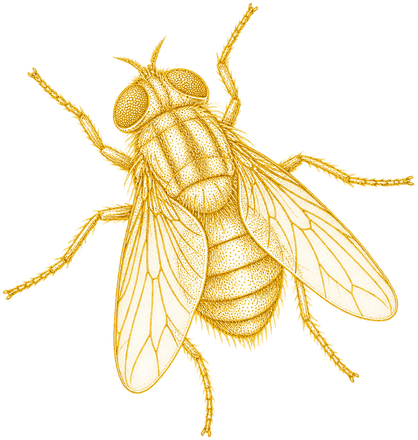
Flies
Cluster flies at the windows in fall, house flies in the kitchen, drain flies in floor sinks. Each points to a different source.
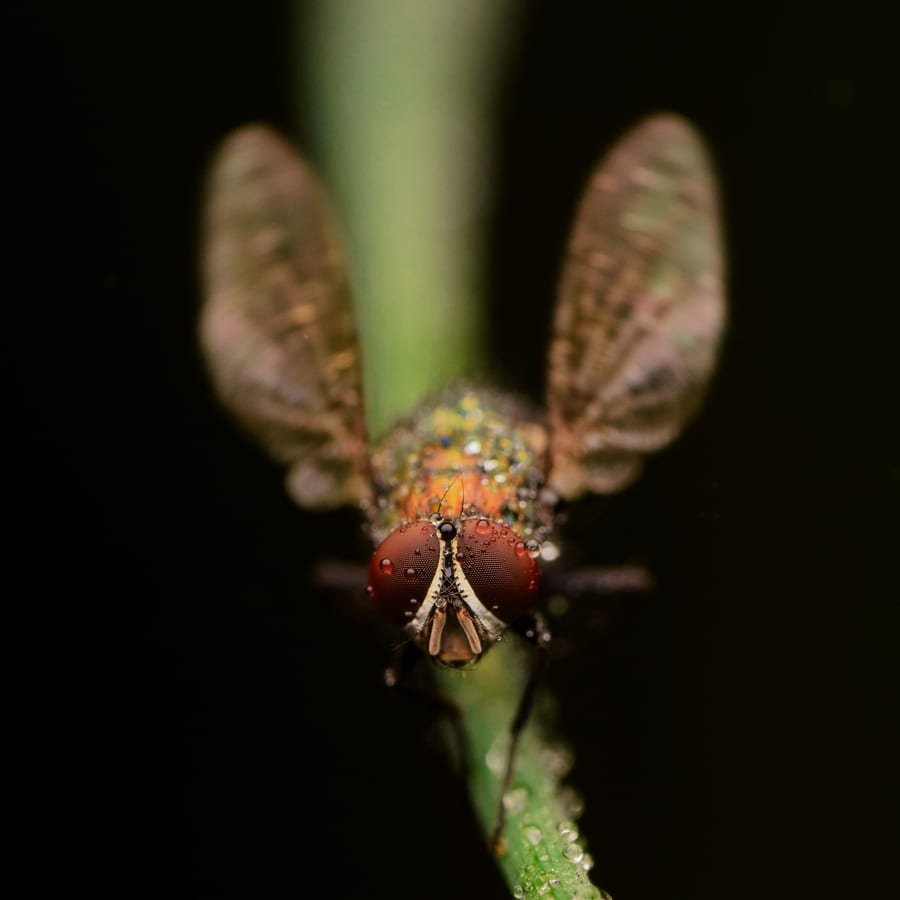
Overview
Flies are more than a nuisance. They move bacteria from waste onto food and surfaces, and in a restaurant or a bar that is a fast way to lose a customer. Different flies come from completely different places, so the first job is naming the fly in front of you.
We run fly work as two separate programs, because small flies and large flies are two separate problems with almost nothing in common. A small fly program chases the breeding film. A large fly program chases the way in.
Small flies — drain flies, fruit flies, phorid flies and fungus gnats — breed in the organic film that builds up inside drains and under equipment, and the whole job is finding and removing that film. Large flies — house flies, blow and bottle flies, cluster flies — breed outside, in waste, or in something dead in a void, then push into the building, so the job is exclusion, sanitation and interception.
Cluster flies are the Manitoba classic: dozens of slow flies at sunny windows in fall and again in spring, after they have overwintered in the attic or the wall voids.
How to identify
- Drain flies are small, fuzzy and moth-like, resting flat on walls near floor drains and mop sinks.
- Fruit flies are tan with red eyes and hover around ripe produce, bar mats, soda guns and recycling.
- Phorid flies are small and humpbacked, and run in quick bursts across a surface instead of flying off; they often trace back to a broken drain line or a spill under a floor tile.
- Fungus gnats are dark, delicate and mosquito-like, and come out of overwatered planters and damp soil.
- House flies are grey with four dark stripes on the thorax and breed in garbage and decaying material.
- Blow and bottle flies are metallic blue or green; a sudden crop of them indoors often means a dead animal in a void, an attic or a chimney.
- Cluster flies are a little larger than house flies, with a fuzzy golden-haired thorax, and move sluggishly at windows in fall and spring.
Fast facts
- Small flies
- Drain, fruit, phorid, fungus gnat
- Large flies
- House, blow/bottle and cluster fly
- Small fly fix
- Find and remove the breeding film
- Large fly fix
- Exclusion, sanitation, interception
Signs to watch for
- Dozens of slow flies at sunny windows in fall or early spring.
- Small moth-like flies resting on walls near floor drains, or fruit flies hanging over a bar mat at close.
- Flies that keep coming back to one spot on the floor, which usually means the source is right underneath it.
- Steady fly activity around garbage, prep areas, loading docks and the back door.
- Maggots in garbage, compost or an organic spill.
- A run of metallic flies indoors with no obvious source, which is worth investigating rather than swatting.
Why it matters
- Flies carry bacteria from waste onto food and prep surfaces.
- In a restaurant, bar or commercial kitchen, fly activity is a reputation problem customers notice immediately.
- Cluster flies stain walls and window frames and arrive in large numbers once established in a building.
- Chasing adults with a spray while the source keeps producing is money spent on a problem that never ends.
How we handle it
Our approach
Identify the fly
We identify the species before anything else, and treat that as the decision point between the two programs. Why it matters: a drain fly and a cluster fly need opposite responses. Get the identification wrong and every step after it is wasted.
Small fly program
Small flies breed in organic film, so the program is source-based. We work through floor drains, grease traps, mop sinks, soda-gun holsters, the seams and voids under equipment, cracked or lifting floor tile, drink lines, recycling, overwatered plants and anywhere a spill has soaked into a joint — then clean, correct or have corrected whatever is producing. Why it matters: the adults on the wall are the symptom. Spraying them does nothing lasting, and the flies keep coming back out of the same few square inches of film until it is gone.
Large fly program
Large flies come from outside or from something dead in a void, so the program is exclusion, sanitation and interception. We deal with door sweeps, thresholds and seals, screens and dock doors; we go through bin, compost and grease-area management; and we place light traps well back from entrances and out of sight of the door. Why it matters: a light trap hung where it can be seen through an open door pulls flies toward the building. Set back properly, behind a door that actually seals and away from an overflowing bin, it catches what gets in instead of advertising the way in.
Exterior and roofline work for cluster flies
Cluster flies are treated from the outside in late summer, before they move in: exterior application to the sun-facing walls and roofline, plus sealing at attic vents, soffit and around the fascia. Why it matters: once they are inside the wall voids there is no good indoor fix, and next spring they come back out at the same windows.
Monitoring and follow-up
We set monitors, come back on a schedule, and use what they catch to tell us whether the source was actually found. Why it matters: fly counts are the honest scoreboard. If the numbers are not dropping, we have not found the source yet, and we would rather know that than guess.
Prevention
Keep them from coming back
- Seal attic vents, soffit and roofline gaps before fall.
- Keep garbage and compost tightly lidded and away from doors.
- Clean drains and overflows regularly to remove organic film.
- Maintain door sweeps, screens and air curtains on commercial doors.
- Clean up spills and organic waste quickly in waste and dock areas.
Questions
Flies questions, answered
Why do I get hundreds of flies at my windows every spring and fall?
That is the classic cluster fly pattern. They overwintered in the attic or wall voids and become active on sunny days. The lasting fix is exterior work and sealing in late summer before they get inside.
I keep spraying the little flies by the bar drain and they come straight back. Why?
Because you are treating adults while the nursery keeps running. That is a small fly problem, and the small fly program is source-based: the film inside the drain, the mop sink, the soda-gun holster, the seam under the ice well. Find that film and remove it and the flies stop. Leave it and no amount of spray keeps up with it.
How do you stop house flies coming in the back door of a restaurant?
That is the large fly program. Large flies breed outside — in the bins, in the grease area, in spilled organics on the pad — then come in through a door that does not seal. We work on the door sweeps and seals, the bin and grease-area routine, and light traps placed back from the entrance and out of sight of the doorway so they intercept what gets in rather than drawing more flies toward the building.
Do you install fly lights for commercial kitchens?
They can be part of a program, but placement decides whether they help or hurt. A light visible from an open door pulls flies in. Set back from entrances, out of the line of sight of the door and away from prep surfaces, they are a useful interception and monitoring device. Source control and exclusion still do the real work.
A pile of metallic blue flies appeared in one room and there is a smell. What is that?
Blow flies in that pattern usually mean something died in a wall void, an attic, a chimney or under a floor. Treating the flies does not address it. We locate the source, and we are honest with you about what access is going to take.
Get it handled
PESTS DON'T WAIT. NEITHER SHOULD YOU.
Call Central Prairie Pest Control or send the quote form — you'll get a clear price and plan before any work starts.