

Ticks
Picked up at the edge of the yard, not out of the trees. Blacklegged and dog ticks are out any time the ground is bare and above freezing.
Overview
Two ticks matter on the Canadian prairies. The blacklegged tick, Ixodes scapularis — often called the deer tick — is the one capable of carrying Lyme disease. The American dog tick, Dermacentor variabilis, is the one people here pull off themselves and their dogs far more often, and it is not a Lyme vector. Knowing which you have is worth more than a blanket treatment.
Ticks do not drop out of trees. They quest: climbing to the top of a grass stem or a piece of leaf litter and waiting with their front legs held out for something to brush past. That single habit is why tick risk on a property concentrates in a narrow band — the boundary where mown lawn meets tall grass, brush or woodland.
They are active any time the ground is snow-free and above roughly freezing, with peaks in spring through early summer and a second rise in autumn. A warm week in March or a mild stretch in October will put them out.
So we treat that boundary rather than blanket-spraying an open lawn, and we walk the property with you to point out the habitat changes that do as much work as the treatment does.
How to identify
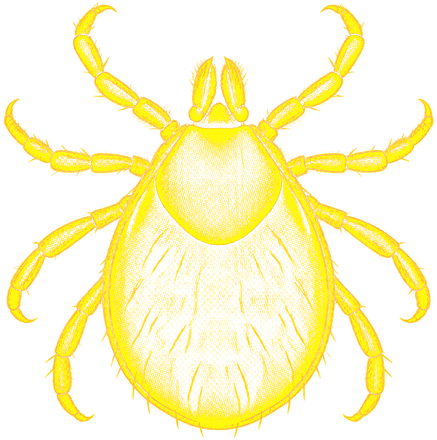
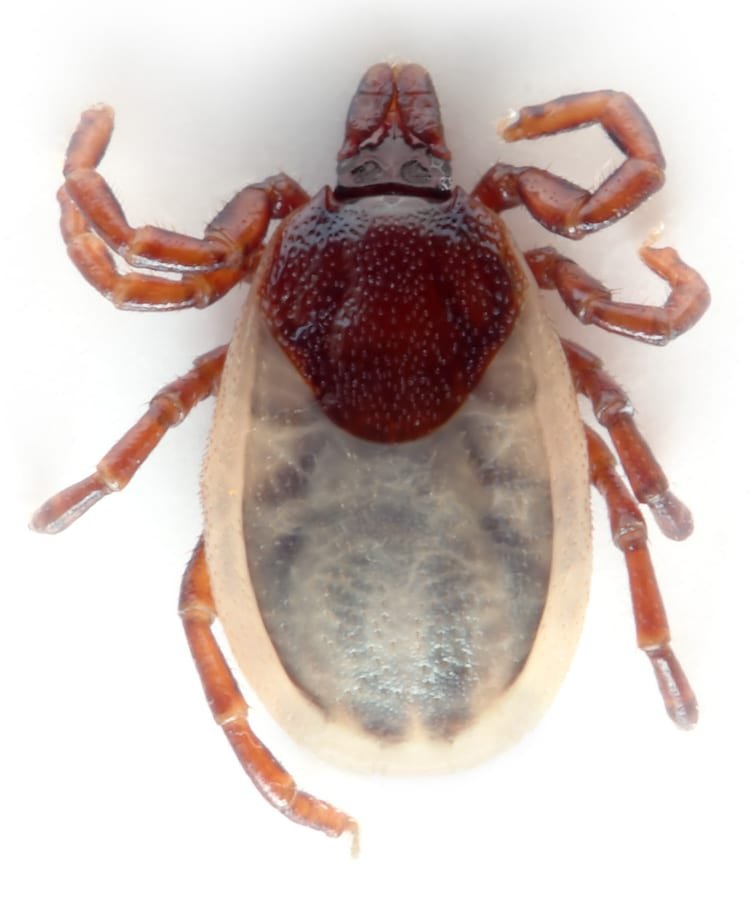
- Adult blacklegged ticks are small — about 3 mm unfed — with dark legs and a reddish-brown body behind a dark shield.
- American dog ticks are noticeably larger and heavier, brown with mottled off-white markings on the shield behind the head.
- Nymphs of both are about the size of a poppy seed and are very easy to miss.
- Once engorged, a tick of either species swells into a grey or bluish bean shape and most of the useful identifying marks are gone.
- Ticks have eight legs as nymphs and adults. Six legs and a distinct waist means you are looking at an insect, not a tick.
Fast facts
- Species that matter
- Blacklegged tick and American dog tick
- Peak
- Spring to early summer, again in autumn
- Active
- Whenever the ground is bare and above freezing
- Where the risk sits
- The lawn edge against tall grass or brush
Signs to watch for
- Ticks found on people, children or pets after time in tall grass, brush or along wooded trail edges.
- Ticks on a dog after it has been down a fence line or into the long grass at the back of the property.
- Repeat finds after mowing or working at the boundary between lawn and brush.
- Heavy leaf litter, tall grass and dense ground cover along the property line, which is the habitat itself rather than a symptom.
Why it matters
- The blacklegged tick can transmit Lyme disease and certain other tick-borne infections. The American dog tick does not carry Lyme.
- Risk rises the longer a tick stays attached, which is why finding and removing them promptly is the part that matters most.
- Pets pick ticks up outdoors and carry them inside. Tick prevention products for animals are a conversation for your veterinarian.
- We treat properties, not people. If you have been bitten or you feel unwell after a bite, speak to your doctor or Manitoba public health — we will not diagnose anything or tell you what a bite means.
How we handle it
Our approach
Property walk and identification
We walk the property, identify the ticks present where we can, and map the edges and harbourage where they are questing. Why it matters: tick pressure is never even across a yard. Treating where they are not is wasted product and a wasted visit.
Perimeter and harbourage treatment
We treat the yard edge — the band where lawn meets tall grass, brush or woodland — along with the leaf litter, ground cover, stone walls and shaded harbourage right beside it. Why it matters: that band is where ticks quest and where people and pets actually pick them up. Treating it goes after the real risk instead of the open lawn where ticks are not.
Habitat reduction plan
We go through the changes that cut tick habitat: keep the grass short, clear the leaf litter, put a dry mulch or gravel buffer between the lawn and the brush, and move woodpiles, sheds and play structures away from the edge and into the sun. Why it matters: the habitat work holds between treatments, and it is the part that keeps paying after we drive away.
Seasonal timing and repeat service
We time service to the activity peaks — spring into early summer, then again in autumn — and repeat through the season where the pressure warrants it. Why it matters: ticks move back in from surrounding land on hosts, so a single spring application will not hold a property for a whole year.
What we will not claim
Treatment reduces tick numbers in the areas we treat. It does not make a property tick-free, and it is not disease prevention. Why it matters: you should still check yourself, your kids and your pets after time outdoors, no matter what we have treated. Anyone telling you otherwise is selling something.
Prevention
Keep them from coming back
- Keep the lawn cut short, especially along the edges of the property.
- Rake and remove leaf litter, and cut back tall grass and dense ground cover at the boundary.
- Lay a dry buffer of wood chip or gravel between mown lawn and any brush or woodland.
- Move woodpiles, sheds and play structures away from the brush line and into open sun.
- Stay to the middle of trails, and check yourself, children and pets after time in long grass or bush.
- Ask your veterinarian about tick prevention for dogs and cats.
Questions
Ticks questions, answered
Do ticks drop out of trees?
No, and it is the thing people most often have backwards. Ticks climb grass stems and leaf litter and wait for something to brush past. If one turns up on your neck or in your hair, it was picked up lower down and walked there.
Can you make my yard tick-free?
No, and anybody who says they can is selling. Ticks arrive on deer, rabbits, rodents and birds from the land around you. What treatment does is knock the numbers down in the band where they quest and cut the habitat they need, so the parts of the property you actually use carry less pressure for a stretch of the season.
I was bitten. What should I do?
Remove the tick carefully with fine-tipped tweezers, gripping at the skin and pulling straight out, then speak to your doctor or your provincial public-health line. We handle the property, not the person. We will not tell you what a bite means or what to watch for, because that is a medical question and it belongs with medical people.
When should the yard be treated?
Spring into early summer is the main window, with a second round in autumn when activity picks back up. Ticks are out any time the ground is snow-free and above about freezing, so a mild stretch in either shoulder season brings them back.
Do both of the ticks around here carry Lyme disease?
No. The blacklegged tick is the Lyme vector. The American dog tick, which is the one found most often on people and dogs in this part of the country, is not. That difference is most of the reason identification is worth doing rather than guessing.
Get it handled
PESTS DON'T WAIT. NEITHER SHOULD YOU.
Call Central Prairie Pest Control or send the quote form — you'll get a clear price and plan before any work starts.