


Mice & Rats
Droppings in drawers, scratching in the walls, chewed packaging. The most common cold-weather call there is.
Overview
Mice and rats move indoors when the weather turns, looking for warmth, food and a quiet place to nest. A house mouse can slip through a gap the width of a pencil, and a small pair in the fall can build into an established population by late winter.
Rodent control is more than setting a few traps. It means confirming what you have, knocking the population down, and pointing out how they are getting in. Cleanup and sanitation of contaminated areas is available as part of the work.
How to identify
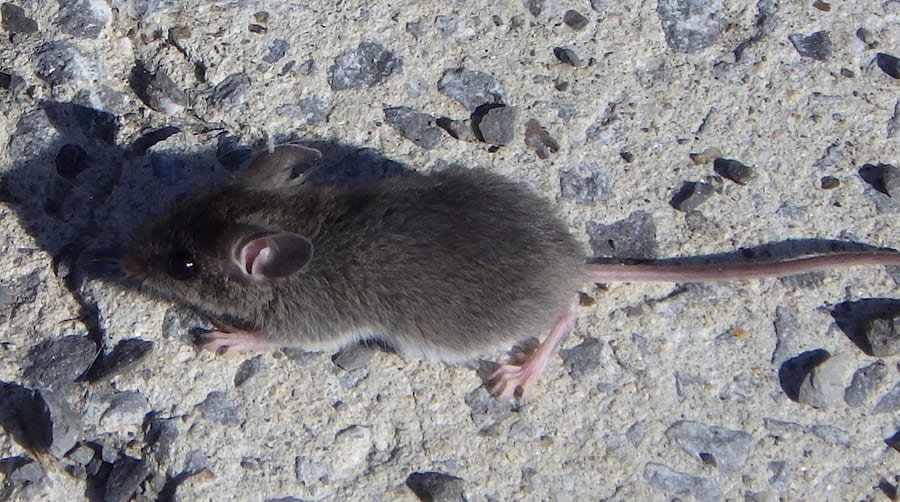
- House mice are grey-brown, 7–10 cm long, with a tail about the length of the body.
- Deer mice have brown backs and white bellies and feet, and turn up in garages, sheds and cabins.
- Rats are larger and heavier-bodied, leaving droppings up to 12–18 mm long.
Fast facts
- Most common
- House mouse and deer mouse
- Peak season
- Fall through spring
- Entry gap
- As small as 6 mm
- Active
- Mostly at night, year-round indoors
Signs to watch for
- Rice-sized dark droppings in drawers, cupboards and along baseboards.
- Scratching or scurrying in walls and ceilings, mostly after dark.
- Gnaw marks on packaging, wiring and stored items.
- Shredded paper, fabric or insulation gathered into hidden nests.
- A musky smell in pantries, cupboards and crawl spaces.
Why it matters
- Droppings and urine contaminate food and prep surfaces.
- Chewed wiring and insulation is a real fire hazard.
- Deer mice in some areas can carry hantavirus, so droppings in closed spaces should be cleaned up properly.
- A breeding population spreads fast through wall voids and into adjoining units.
How we handle it
Our approach
Inspect and identify
We confirm the species, map the activity and find the entry points. Why it matters: mice and rats are trapped and baited differently, and the plan depends on knowing which one you have and where it is getting in.
Live traps
We use live-catch traps where they suit the situation, such as sensitive areas or where a customer prefers them. Why it matters: they give a removal option that fits homes with specific concerns about how trapping is done.
Bait in secured bait stations
Where bait is appropriate, it goes only into locked, tamper-resistant stations sized for the property. Why it matters: the station keeps bait away from children, pets and non-target wildlife while still reaching the rodents.
Snap traps
We set snap traps in protected placements along active runways. Why it matters: they remove rodents quickly and let us see exactly what is being caught and where.
Sticky monitoring where legal
In some settings we use sticky monitors to track activity, where local rules allow. Why it matters: they show which runways are busy so the rest of the equipment is placed where it counts.
Ongoing monitoring
We return to check and reset equipment until activity stops, and review how well the entry points have been closed. Why it matters: catching the last few rodents and confirming the entry work is what keeps the problem from restarting.
Optional add-on
Rodent exclusion — sealing the entry points that let mice and rats in — is priced separately and is something you choose to add. You decide whether Central Prairie Pest Control carries out the exclusion work or you handle the sealing yourself.
Prevention
Keep them from coming back
- Seal gaps larger than 6 mm around doors, vents, utilities and the foundation.
- Store pantry food, pet food and bird seed in hard sealed containers.
- Keep garbage in lidded bins away from doors.
- Cut back clutter in basements, garages and storage rooms.
- Keep firewood and dense vegetation off the foundation.
Questions
Mice & Rats questions, answered
Do you seal up the holes as part of treatment?
Exclusion work is a separate add-on rather than part of the base treatment. After the inspection we show you every gap that needs sealing, and you decide whether we do that work or you take it on yourself.
Are the treatments safe around kids and pets?
Indoor work relies on trapping in protected spots. Any bait is locked inside tamper-resistant stations that children, pets and non-target wildlife cannot get into.
How long until the rodents are gone?
Most homes see activity stop within one to three weeks, depending on the size of the population and how well the entry points get sealed. We give you an honest read after the inspection.
Is one mouse a sign of an infestation?
Not always, but do not ignore it. Mice are usually noticed once a population is already established. Droppings in more than one spot, or noise in the walls, means it is time for an inspection.
Get it handled
PESTS DON'T WAIT. NEITHER SHOULD YOU.
Call Central Prairie Pest Control or send the quote form — you'll get a clear price and plan before any work starts.